Eporner HD Sex Porn Discounts Sex Games Porn Games XXX Games Hentai Games PornStar Games 3D Porn Celebrity Sex Videos Free Porn Games
Live Sex Free Live Sex Free Sex Games Páginas Porno Nude Celebrities TikTok Porn Sex Cam Rose Toy Cams Porno AI Porn Videos
Live Sex Free Live Sex Free Sex Games Páginas Porno Nude Celebrities TikTok Porn Sex Cam Rose Toy Cams Porno AI Porn Videos

Published on 2026/10/14
There's something interesting about erotic photography: you don't always have to show everything to spark the imagination. A pose, a glance or a play of light and shadow can be just as suggestive as full nudity.
And that's where much of the magic of photography lies. The photographer decides what to show, how to show it and what feelings to convey, while each viewer interprets the images according to their own tastes and preferences.
We wrap up this little journey through FriDi's visual world with a new collection of photographs where portraiture, beauty and sensuality once again share the spotlight.


FRIDI. THE BEAUTY OF THE HUMAN BODY (VOL2)
Yesterday we started exploring the work of FriDi, also known as Frizellfly, a photographer who finds an endless source of inspiration in the human body. Today we're back with a second selection of his photographs.There's something interesting about erotic photography: you don't always have to show everything to spark the imagination. A pose, a glance or a play of light and shadow can be just as suggestive as full nudity.
And that's where much of the magic of photography lies. The photographer decides what to show, how to show it and what feelings to convey, while each viewer interprets the images according to their own tastes and preferences.
We wrap up this little journey through FriDi's visual world with a new collection of photographs where portraiture, beauty and sensuality once again share the spotlight.


FEATURED MODEL
ONLYFANS · FREE
Busty Molly Boop
@honeymoolly
Discover her photos, explore her content and visit her profile for free.

FEATURED MODEL
ONLYFANS · FREE
Sophia Reed
@fantasysophiareed
Discover her photos, explore her content and visit her profile for free.





 x.com/frizellfly
ExtraBall
OOPS!
ExtraBall2













ALL IN ON BLACK VOL7
We've spent all week, and part of last week, doing a crash course in colors. Is this lilac or violet? Does that one lean more toward blue? Does yellow really have twenty different shades? And depending on the lighting, the screen, or who's looking at it, the exact same piece of clothing can apparently end up being one color or another.
But today we can relax.
Because today it's black. And black has one wonderful advantage for those of us working with a color palette of twelve colors at most: black doesn't leave much room for debate.
Black is black.
There's no such thing as "light black." That's gray, and even the most basic among us can figure that one out. There's no need to talk about "dark black" either, because if there's one color that already comes dark straight out of the box, it's this one. And strong black... well, that's black. Period.
So for once, we can forget about nuances, shades, flower names, gemstones and Pantone charts. Today we know exactly what we're looking at.
And let's be real, if there's one area where black works especially well, it's clothing and lingerie. It doesn't need fancy names or explanations: it catches the eye, goes with everything and rarely fails.
After so many days putting our limited knowledge of colors to the test, today we're finally on home turf.
All on black.

# Watch videos
 You can find much more content like this on our TELEGRAM CHANNEL
How to unlock adult content on Telegram (Apple, Android, or any other device)
If you enter our channel and see an adult-content warning that prevents you from viewing anything, it means the restriction filter is enabled.
Go to https://web.telegram.org, log in, and open:
Settings → Privacy → Sensitive Content
Enable “Disable Restrictions” and you're all set.
The change will automatically sync with the Telegram app on all your devices.
ExtraBall







YELLOW VOL3
These days we've been following a pretty simple theme: color-coded videos. We've already been through pink, magenta, green, blue, lilac, red... and now it's yellow's turn.
Although we already know how this whole color thing works. Depending on the lighting, the screen, and how picky someone feels like being, there'll be clothes that some people see as yellow while others will swear they're closer to green, orange, gold, cream, or God knows what shade pulled straight out of a paint catalog.
So let's establish one rule to avoid wasting time: if I say it's yellow, it's yellow.
Period.
Because seriously... is the exact color of the clothes really the most important thing you want to argue about after watching the videos you're about to see?
I don't know. I think there are a few other details worth paying a lot more attention to.

# Watch videos
You can see much more content like this on our TELEGRAM CHANNEL
Para usuarios de Apple
Si al entrar en nuestro Canal de Telegram te aparece un mensaje de que el contenido es para adultos y no puedes ver nada, entonces es que tienes activada la protección para adultos.
Tienes que ir a la versión web del Telegram https://web.telegram.org e identificarte, si no lo estás ya. En la configuración, en la sección "Privacidad", buscar la opción "Materiales sensibles" y activar "Desactivar restricciones". En cuanto lo hagas, el ajuste se sincronizará automáticamente con el resto de tus aplicaciones, incluidas las versiones para iOS y macOS de la App Store.
A partir de ahí ya podrás entrar en todos los Canales para adultos.
ExtraBall
I accept death with honor, but never defeat 🦅🐍
ExtraBall2








 CamBB.xxx
We find the best live porn cams across many different cam sites like Streamate, Chaturbate, Cam4 and Stripchat.
 ChatSex.xxx
With Chat Sex you get free sex cams featuring nude cam girls you can chat with for free.

FEATURED MODEL
ONLYFANS · FREE
Misty Mayhem
@mistychains
Discover her photos, explore her content and access her profile for free.

RECOMMENDED SITES
 Show all
Add your site
- Phun
- mybigtitsbabes
- CrazyShit
- Entensity
- Nude Babes
- sweetlicious
- BoobieBlog
- Porn Pics
- Erotic Beauties
Show all- XRares
- The Nip Slip
- Twistedporn
- Erosberry
- celeb-stalker.com
- Kanoni Net
- Shocking Porn
- Babes & Bitches
- Candid Teens
Add your site💩 CrazyShit
🤪 eFukt
👉🍑 Top XXX Pictures
Bingo Porno
Best Porn Blog Sites
 Sex Games
MrPornGeek
Hardcore Porn Videos
NSFW.Tools
Sex AI Chat
ShareAnyNudes
Teenager365
Best JAV Models
Hotness
HornyFap
Best AI Porn Generation


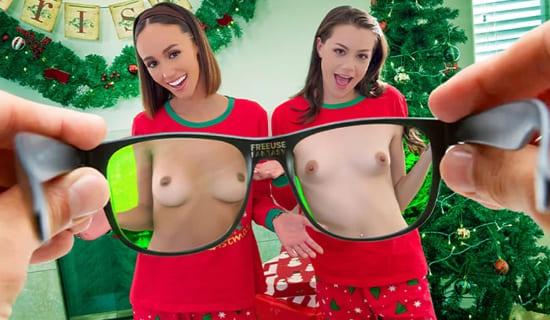








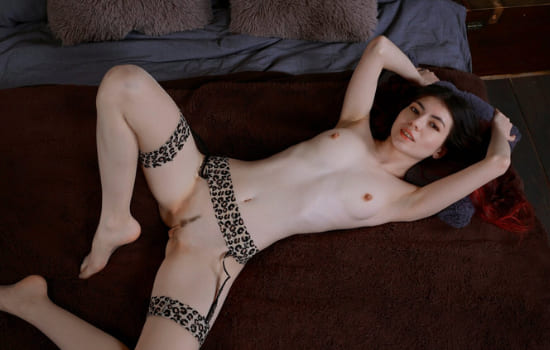





FRIDI. THE BEAUTY OF THE HUMAN BODY (VOL2)
Yesterday we started exploring the work of FriDi, also known as Frizellfly, a photographer who finds an endless source of inspiration in the human body. Today we're back with a second selection of his photographs.
There's something interesting about erotic photography: you don't always have to show everything to spark the imagination. A pose, a glance or a play of light and shadow can be just as suggestive as full nudity.
And that's where much of the magic of photography lies. The photographer decides what to show, how to show it and what feelings to convey, while each viewer interprets the images according to their own tastes and preferences.
We wrap up this little journey through FriDi's visual world with a new collection of photographs where portraiture, beauty and sensuality once again share the spotlight.
# View photographs
ExtraBall
OOPS!
ExtraBall2

SOCIAL MEDIA IS FILLING UP WITH AI-GENERATED WOMEN
She goes by the name of Estelle Navaro, and on Instagram she appears as an attractive mature woman sharing videos showing off her charms. Her account has nearly half a million followers, and her posts have racked up millions of views. In the comments, hundreds of men shower her with compliments, hearts, kisses and declarations of love. Some even seem convinced that, with a little luck, they might actually win her over.
But there's one small detail: Estelle is a character created using artificial intelligence. Her videos have an artificial appearance that, by now, is fairly obvious to anyone used to spotting this kind of content. However, there's no mention of it on her profile and, as with many similar accounts, she also promotes access to more daring and explicit content for a fee.
Obviously, there's someone behind the account. But that someone isn't the woman appearing in the videos. And I'm convinced that much of the material posted comes from videos found online, possibly featuring other creators, either real women or AI-generated ones, which are then modified to make their protagonists look like Estelle. A relatively simple way to keep an account constantly supplied with content without having to film a single thing.

This time, I've put together several versions of the same sequence to show just how much a woman's appearance can be altered. Changing her clothes, body, face or specific features is becoming easier and easier. And quite often, there's no need to generate a video from scratch: all you need is an existing recording and the ability to digitally transform the person appearing in it.
The result is a complete mess. It's already becoming difficult to tell who's real, who's a copy, who's a fictional character and who's using someone else's body or movements. And the most interesting thing is that all of this is still happening mainly with pre-recorded and edited videos.
Now imagine what will happen when these transformations can be applied convincingly and in real time during a live broadcast. An ordinary-looking woman, or even one who's not particularly attractive, will be able to turn into an absolute stunner on camera, with a completely different face, body and appearance, while talking, moving and interacting with her viewers.
But that will only be an intermediate stage. The next step will be even more surprising: there won't even need to be a real woman in front of the camera. The star of the show will be an entirely AI-generated character, capable of holding live conversations with dozens, hundreds or thousands of users simultaneously.
And here's where things get really interesting: each user will be able to enjoy a completely personalized experience, as though he were the only viewer. The model will remember his name, his tastes, previous conversations and preferences. She'll speak directly to him, answer his questions, react to his comments and adapt her behavior to whatever he likes most. Meanwhile, she'll be doing exactly the same thing with another thousand men, each convinced he's receiving her exclusive attention.
Thousands of intimate conversations, thousands of different experiences and just one woman who doesn't even exist. And behind it all, probably someone running the business and watching the money roll in.
Because when we reach that point, the question will no longer be whether the girl on the screen is real. The question will be how many people are willing to pay for an artificial relationship designed to make them feel special.

# Watch videos
ExtraBall
It's never too late to develop an interest in fashion.
ExtraBall2





Contact
You can tell us whatever you want via email: [email protected]
If you prefer, you can use this contact form:
If you prefer, you can use this contact form:





GIVE ME MORE KISSES
A kiss is one of the most universal and, at the same time, most ambiguous gestures in human relationships. With the same lips, we can express love, desire, tenderness, respect, gratitude, friendship, and even betrayal. And the curious thing is that, although the physical gesture is practically the same, its meaning can change completely depending on who's giving it, who's receiving it, and the circumstances surrounding it.
There's no single explanation for the origin of kissing. Some theories link it to ancient caregiving and feeding behaviors, while others emphasize the role of physical contact in forming emotional bonds. What we do know is that kissing is part of the customs of many societies, although not all cultures practice it in the same way or give it the same meaning.
And the thing is, kissing isn't exclusively a sexual behavior. In fact, many of the kisses we give throughout our lives have absolutely no erotic intention. A father kisses his child to express love and reassurance. Two friends might kiss to greet each other. Someone kisses another person's hand as a sign of respect. And two lovers might kiss to express a desire they don't even need to put into words.
The gesture may be similar, but the message changes completely.

# Click here to see the full content of this post
SEX DOLLS: SO REALISTIC YOUR BRAIN DOESN'T KNOW WHAT TO THINK
A few years ago, whenever you saw a silicone sex doll, something just didn't look quite right. The faces were too stiff, the expressions looked frozen, and the skin had that artificial appearance that, no matter how well the doll was made, constantly reminded you that you were looking at an object.
We're not talking about those old inflatable dolls with their mouths wide open and faces that looked like they'd just seen a ghost, but much more sophisticated models that were already trying to recreate the human body with a certain degree of realism. The problem was that the harder they tried to look human, the more obvious it became that they weren't.
But things have changed. A lot.
Today's manufacturers have achieved a level of detail that would have seemed unthinkable just a few years ago. Skin textures, tiny imperfections, body proportions, facial expressions, makeup, hair... Some of these dolls, photographed with good lighting and from the right angles, could easily pass for real women.
And this is where things start getting interesting.

Because back then, your brain immediately picked up on something being off. There was this instinctive sense of discomfort, that strange feeling you get when something looks almost human, but not quite. It's a phenomenon known as the uncanny valley.
Now, looking at some of today's models, that feeling seems to have faded considerably. You know you're looking at a doll because someone told you, because you know the context, or because you've seen other pictures of the same product. But if someone showed you a random photo with no explanation, you'd probably have to look twice.
And the really curious thing is that knowing it's not a real person doesn't necessarily stop you from finding it attractive.
That's the real breakthrough with these dolls. They don't need to fool you into believing they're alive. They just need to trick the part of your brain that processes what your eyes are seeing for a few seconds.
And sure, you could get all philosophical about perception, artificial intelligence, psychology, and technological evolution, but you could also look at some of these pictures and think: "Fuck, someone lend me one for a weekend. Now I'm curious."
Because looking at them on a screen is one thing, but having a life-size human replica standing right in front of you is something else entirely. We're talking about something with considerable weight, skin designed to mimic human touch, and a level of detail that would probably be even more impressive in person.
Of course, let's not get carried away. These dolls aren't robots or intelligent artificial companions. They don't walk, hold spontaneous conversations, react on their own, or have any autonomy. No matter how lifelike some promotional videos make them appear, they're still static figures that need someone to position them, dress them, and move them around.
And that's where a pretty funny contradiction comes in. You can have a spectacular-looking artificial woman at home, with proportions you've personally chosen and an expression straight out of a professional photo shoot, but whenever you want to move her to another room, you're going to have to carry her. And when you're done, you'll need to figure out where the hell to store the whole thing.

Because we're not exactly talking about a toy you can discreetly slip into your nightstand drawer. We're talking about a life-size body that takes up space, weighs a lot, requires maintenance, and can cost several thousand dollars.
Which brings us to another question: what exactly is someone looking for when they buy one of these dolls?
The answer probably depends on the person. For some, it's a sexual fantasy. For others, a form of companionship, a collecting hobby, or simply the desire to experience something that, until relatively recently, seemed like it belonged in a science fiction movie.
There's no need to come up with some deep psychological explanation for every buyer, either. Sometimes we buy things because we like them, because they spark our curiosity, or simply because we can afford them. And if someone wants to spend their money on a hyperrealistic doll, as long as they're not hurting anyone, there's probably no need to stage a family intervention.
What's truly fascinating is seeing just how far we've come in recreating the human body while everything involving movement and autonomy remains an enormous challenge. Making a convincing face is one thing. Getting that same face to smile, make expressions, look around, and respond naturally is a completely different story.
And maybe that's why these dolls represent such a peculiar moment in technology: we've learned how to manufacture an extraordinarily convincing human appearance, but we're still a long way from recreating what makes a person seem alive.
Until that future arrives, if it ever does, manufacturers keep perfecting what they already know how to do. And judging by the results, it's hard to deny that some of their creations are genuine feats of craftsmanship.
Here's a selection of photos and videos featuring some of today's models. Pay attention to the faces, expressions, skin, and tiny details. And remember, no matter how natural these ladies might look, not a single one of them is going to get off the couch and grab you a beer.
Although, while we're making requests, it wouldn't hurt if the next generation came with that feature built in.

# Click here to see all the content from this post
ExtraBall
Twister game
ExtraBall2