Eporner HD Sex Porn Discounts Sex Games Porn Games XXX Games Hentai Games PornStar Games 3D Porn Celebrity Sex Videos
Live Sex Free Live Sex Free Sex Games Páginas Porno Nude Celebrities TikTok Porn Sex Cam RoseToy Official Cams Porno AI Porn
Live Sex Free Live Sex Free Sex Games Páginas Porno Nude Celebrities TikTok Porn Sex Cam RoseToy Official Cams Porno AI Porn

Published on 2026/10/23
ELEVATORS
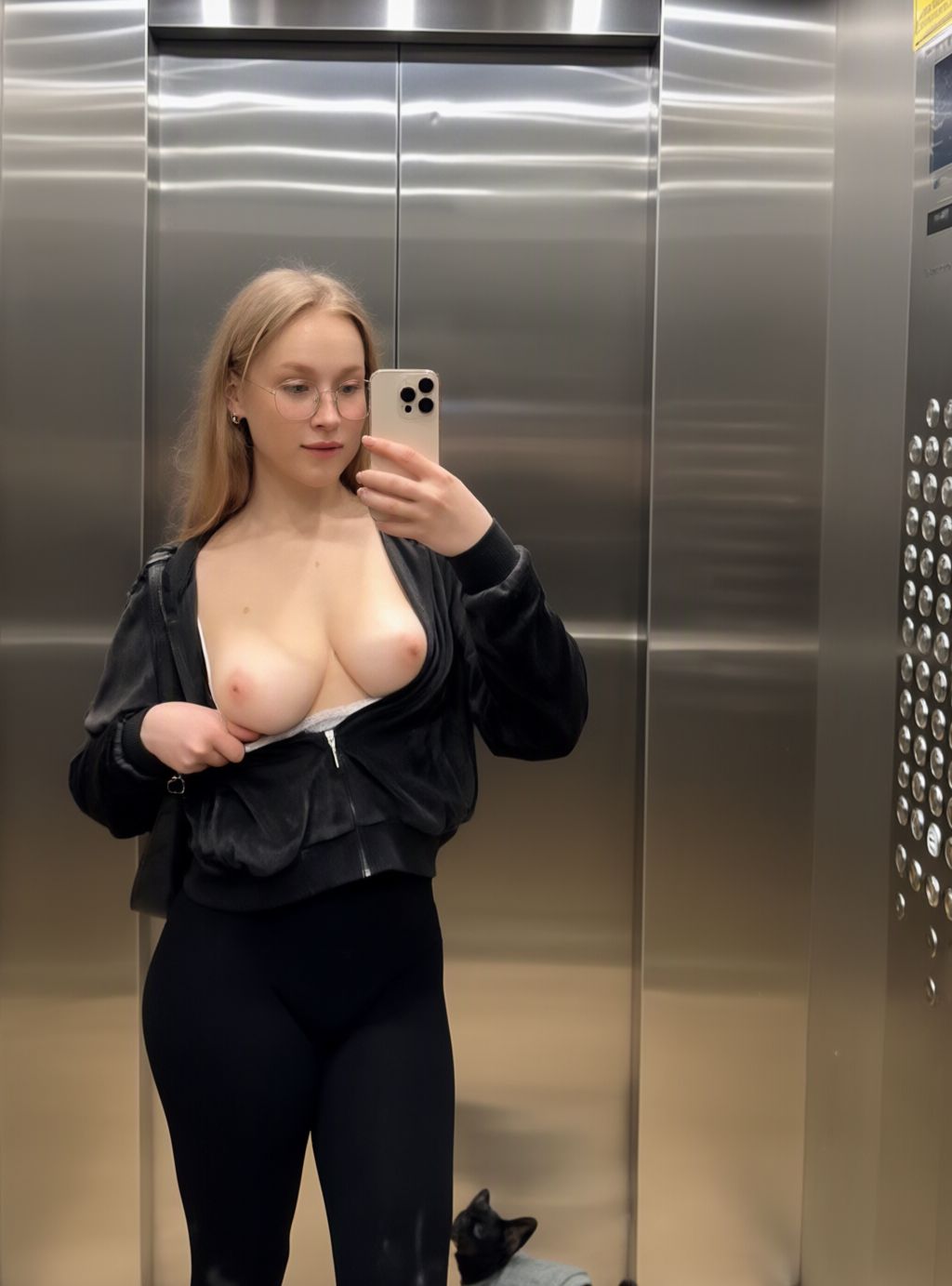
You're alone in an elevator, there's a mirror in front of you, and you've got a few floors to go. You check yourself out, fix your hair, see how your clothes look... And if you're the kind of woman who enjoys showing some skin on camera, pulling out your phone and filming yourself flashing your tits or lifting your skirt can feel like a pretty natural next step.
In fact, for many content creators, elevators have become a regular filming spot. No need to plan a shoot, scout a location, or put on a whole production. The mirror is already there, the lighting is usually good enough, and your phone takes care of the rest. A couple of floors, a couple of tits, and another video for the collection.
And there's something particularly appealing about these recordings: the contrast between such an ordinary setting and what's happening in front of the mirror. The casual way a girl lifts her shirt, pulls down her pants, or flashes her ass while keeping an eye on her reflection, as if she were just checking whether her jacket was sitting right.
FUCK ANY GIRL WITH AI
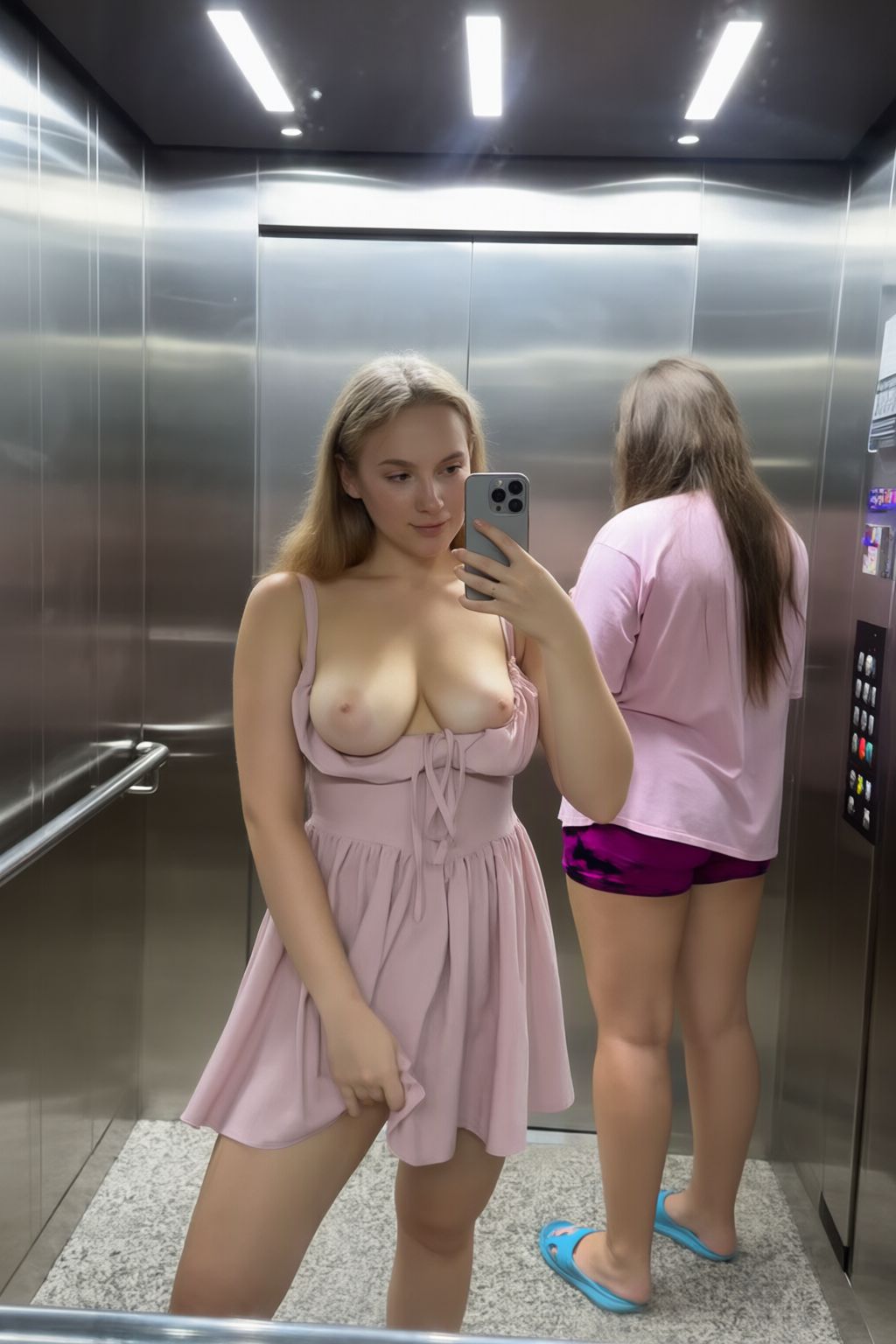
Let's not kid ourselves, though. There's some planning involved here: they know exactly what they're doing, where to position the phone, and how to make the most of the camera angle. It's not all spontaneous, and it doesn't need to be. The result works because it has that homemade exhibitionism vibe, a video shot without much fuss, with the added kick of taking place in a shared space where nobody normally expects to find a woman flashing her tits.
Anyway, here's another installment of elevator video selfies. Women making the most of the ride by showing off a little more than the building's homeowners' association regulations probably allow.
And to think that, for me, the most entertaining thing about an elevator is reading the last inspection sticker.
# Click here to see all the content in this post
 You can find much more content like this on our TELEGRAM CHANNEL
How to unlock adult content on Telegram (Apple, Android, or any other device)
If you enter our channel and see an adult-content warning that prevents you from viewing anything, it means the restriction filter is enabled.
Go to https://web.telegram.org, log in, and open:
Settings → Privacy → Sensitive Content
Enable “Disable Restrictions” and you’re all set.
The change will automatically sync with the Telegram app on all your devices.
ExtraBall







ELEVATORS
You're alone in an elevator, there's a mirror in front of you, and you've got a few floors to go. You check yourself out, fix your hair, see how your clothes look... And if you're the kind of woman who enjoys showing some skin on camera, pulling out your phone and filming yourself flashing your tits or lifting your skirt can feel like a pretty natural next step.
In fact, for many content creators, elevators have become a regular filming spot. No need to plan a shoot, scout a location, or put on a whole production. The mirror is already there, the lighting is usually good enough, and your phone takes care of the rest. A couple of floors, a couple of tits, and another video for the collection.
And there's something particularly appealing about these recordings: the contrast between such an ordinary setting and what's happening in front of the mirror. The casual way a girl lifts her shirt, pulls down her pants, or flashes her ass while keeping an eye on her reflection, as if she were just checking whether her jacket was sitting right.
FUCK ANY GIRL WITH AI
Let's not kid ourselves, though. There's some planning involved here: they know exactly what they're doing, where to position the phone, and how to make the most of the camera angle. It's not all spontaneous, and it doesn't need to be. The result works because it has that homemade exhibitionism vibe, a video shot without much fuss, with the added kick of taking place in a shared space where nobody normally expects to find a woman flashing her tits.
Anyway, here's another installment of elevator video selfies. Women making the most of the ride by showing off a little more than the building's homeowners' association regulations probably allow.
And to think that, for me, the most entertaining thing about an elevator is reading the last inspection sticker.
# Click here to see all the content in this post
You can find much more content like this on our TELEGRAM CHANNEL How to unlock adult content on Telegram (Apple, Android, or any other device)
If you enter our channel and see an adult-content warning that prevents you from viewing anything, it means the restriction filter is enabled.
Go to https://web.telegram.org, log in, and open:
Settings → Privacy → Sensitive Content
Enable “Disable Restrictions” and you’re all set.
The change will automatically sync with the Telegram app on all your devices.
ExtraBall
Published on 2026/10/23
SRVIRAL #2331
Testing the new elevator
FUCK ANY GIRL WITH AI
You can see many more videos, curiosities and silly stuff visiting srviral.com
ExtraBall







SRVIRAL #2331
Testing the new elevator
FUCK ANY GIRL WITH AI
 First try |
 Saved |
 Invisibility |
 Printer |
 Occupational hazards |
 Parkour |
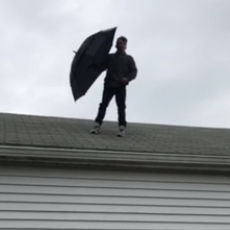 Parachute |
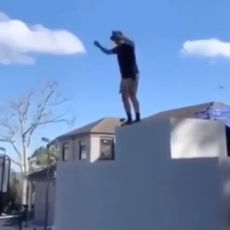 Elastic bed |
 Drawbridge |
ExtraBall


FEATURED MODEL
ONLYFANS · FREE
Mistress Sasha
@domsasha
Discover her photos, explore her content and visit her profile for free.

FEATURED MODEL
ONLYFANS · FREE
Sophia Reed
@fantasysophiareed
Discover her photos, explore her content and visit her profile for free.
Published on 2026/10/23
THE ART OF BURNING INCENSE THROUGH YOUR ASS
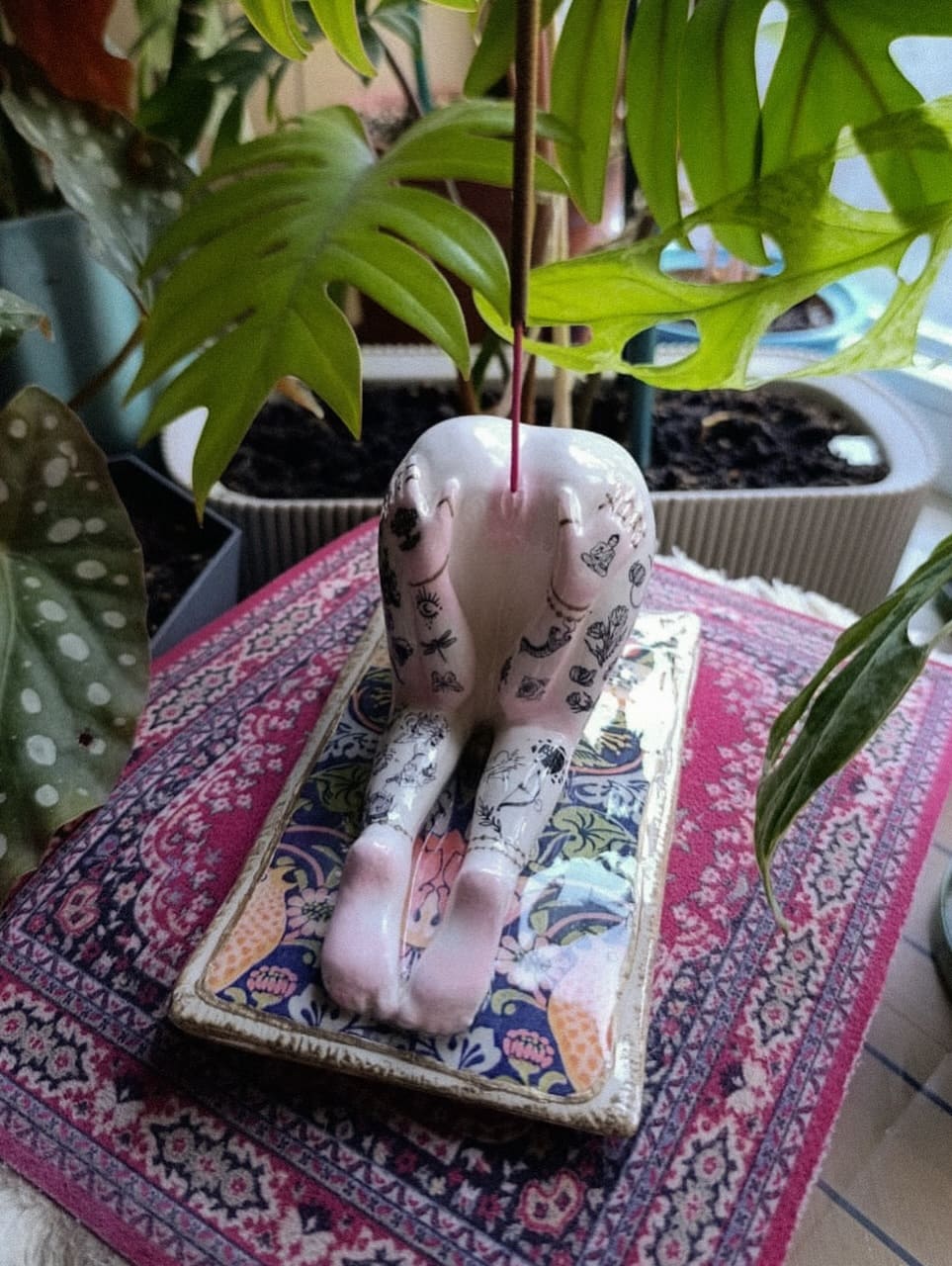
Russian artist Yuma Markva has a rather unusual approach to home decor. Her incense burners are small ceramic sculptures depicting kneeling female figures with their asses sticking up, decorated with delicate tattoos of flowers, butterflies, and other designs. Handmade pieces, carefully crafted down to the smallest detail, with one particular feature that makes them a hell of a lot more entertaining than your average store-bought incense holder.
Because yes, the incense stick goes right into the butthole.
And the best part is that it actually works. The stick stays perfectly in place while the smoke slowly rises among plants, flowerpots, and decorative objects, bringing that touch of spiritual tranquility you'd expect from incense, except this time it's coming out of a porcelain lady's backside.
There's something sensual, something irreverent, and plenty of craftsmanship in these figures. The glossy finishes, pinkish tones, tiny tattoos, and decorated bases turn each piece into a little work of art that you could easily display on a shelf in your living room.
I particularly like the contrast between the sculptures' delicate appearance and the cheekiness of the concept. Art doesn't have to be solemn to be charming, and it certainly doesn't have to take itself too seriously to be interesting.
You can discover more of Yuma's work on her Instagram account, where she shares her handmade creations.
And now, whenever someone tells you that burning incense helps clear out negative energy, you'll know exactly where to start.
FUCK ANY GIRL WITH AI
# Click here to see the full content of this post
ExtraBall
OMG!

ExtraBall2







THE ART OF BURNING INCENSE THROUGH YOUR ASS
Russian artist Yuma Markva has a rather unusual approach to home decor. Her incense burners are small ceramic sculptures depicting kneeling female figures with their asses sticking up, decorated with delicate tattoos of flowers, butterflies, and other designs. Handmade pieces, carefully crafted down to the smallest detail, with one particular feature that makes them a hell of a lot more entertaining than your average store-bought incense holder.
Because yes, the incense stick goes right into the butthole.
And the best part is that it actually works. The stick stays perfectly in place while the smoke slowly rises among plants, flowerpots, and decorative objects, bringing that touch of spiritual tranquility you'd expect from incense, except this time it's coming out of a porcelain lady's backside.
There's something sensual, something irreverent, and plenty of craftsmanship in these figures. The glossy finishes, pinkish tones, tiny tattoos, and decorated bases turn each piece into a little work of art that you could easily display on a shelf in your living room.
I particularly like the contrast between the sculptures' delicate appearance and the cheekiness of the concept. Art doesn't have to be solemn to be charming, and it certainly doesn't have to take itself too seriously to be interesting.
You can discover more of Yuma's work on her Instagram account, where she shares her handmade creations.
And now, whenever someone tells you that burning incense helps clear out negative energy, you'll know exactly where to start.
FUCK ANY GIRL WITH AI
# Click here to see the full content of this post
ExtraBall
OMG!
ExtraBall2
Published on 2026/10/23
RANDOM AI-GENERATED IMAGES
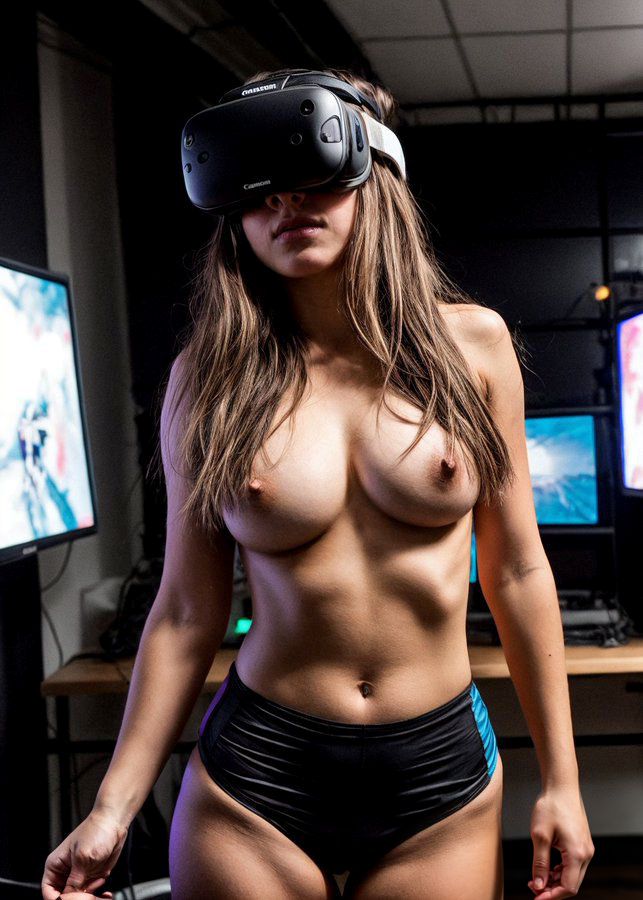
I think we're starting to look at these images differently. At first, we were amazed that artificial intelligence could create such attractive women. Then we started paying attention to the details, looking for mistakes, impossible hands, strange expressions, or anything that might give the illusion away. But now, with the level of realism some of these creations are achieving, we might be entering a much more interesting phase.
We're starting to believe they're real.
And interestingly enough, not because they're perfect. In fact, they're becoming more attractive precisely when they stop looking perfect. A tiny wrinkle, a distracted expression, an unflattering pose, skin that doesn't look like it's been run through twenty filters... Those imperfections we've spent years trying to remove from photographs are now the very things that make a computer-generated woman seem authentic.
And when the brain starts accepting something as real, even though we know perfectly well it isn't, a rather interesting door opens.
FUCK ANY GIRL WITH AI
Because sex and desire are two of the biggest driving forces behind human behavior. We spend a good part of our lives trying to attract, impress, seduce, experience pleasure, and, above all, feel that our feelings are reciprocated. And that last part matters. It's not always enough to desire someone. We also want someone to desire us.
But human relationships are complicated. Age, insecurities, shyness, lack of time, responsibilities, accumulated disappointments, or simply the thought of having to start all over again can lead many people to give up on part of their emotional or sexual lives. Not necessarily because they've stopped having desires, but because fulfilling them starts to feel like too much trouble.
And this is where artificial intelligence could end up sticking its nose into one of the most intimate areas of our existence.
Imagine these women we currently see in simple photographs starting to come to life. Imagine being able to talk to them, having them remember our conversations, know our tastes, have a sense of humor, keep us company, and even make us feel attractive, interesting, and desired.
We're not necessarily talking about replacing a human relationship. We're talking about offering an experience that, for certain people at certain points in their lives, could be satisfying enough that they no longer feel the need to look elsewhere for some of those things.
Because the brain doesn't always care as much about where an emotion comes from as it does about how that emotion makes us feel.

We get emotional watching movies featuring characters we know don't exist. We grow attached to video game characters. We can feel a very real connection with someone we've never even met in person. So imagining that one day we might develop emotional and sexual bonds with entities created through artificial intelligence doesn't seem all that far-fetched.
Of course, all of this raises some pretty fucked-up questions. What happens when someone gets used to a companion who never argues, always has time for them, and seems to understand everything? Will it make us happier, or will it make us even less tolerant of the imperfections of real relationships? Will it be a solution to loneliness, or a much more sophisticated way of hiding from it?
And there's another issue we shouldn't overlook: feeling desired isn't exactly the same as being desired. An artificial intelligence can learn to express affection in an extraordinarily convincing way, but that doesn't mean it experiences that affection the way a person would. Although perhaps, for someone enjoying the experience, that distinction won't always matter quite so much.
What's truly fascinating is that all of this has stopped feeling like some distant fantasy. Image generation is improving at a ridiculous pace, videos are becoming increasingly convincing, synthetic voices sound more natural, and conversational systems are beginning to offer interactions that just a few years ago we would have considered science fiction.
And if all these technologies keep advancing and eventually come together, it's reasonable to wonder just how far they could go. Maybe a few years from now, these photographs will look as primitive to us as the earliest 3D video games do today.
Who knows? We might end up having romantic, emotional, or sexual experiences with digital characters capable of adapting to our personalities, desires, and needs. And for many people, that might not be a sad alternative or an admission of romantic defeat, but a new way to enjoy a part of life they thought they'd left behind.
There will also be risks, dependencies, and companies more than happy to charge a subscription for every minute of artificial affection. Don't think for a second they're going to invent the perfect girlfriend without first figuring out twenty different ways to squeeze money out of us.
But jokes aside, I have a feeling we're witnessing the beginning of something that goes far beyond a few photographs of naked women.
We might be witnessing the first steps toward a new way of understanding desire, companionship, and intimacy.
And the funniest thing is that we've spent our entire lives imagining a future full of flying cars, floating cities, and robots serving us breakfast, when it turns out that one of the first great science-fiction revolutions we actually get to enjoy might be something far more intimate.
For now, here's another installment of our collection of women created by artificial intelligence. Some are so realistic it's hard to remember they've never actually stood in front of a camera.
And while you enjoy the images, think about this: if this is what technology can do today, what the fuck will it have in store for us ten years from now?

# Click here to see the full content of this post
ExtraBall
Never let anyone tell you that you can't do something.
ExtraBall2




RANDOM AI-GENERATED IMAGES
I think we're starting to look at these images differently. At first, we were amazed that artificial intelligence could create such attractive women. Then we started paying attention to the details, looking for mistakes, impossible hands, strange expressions, or anything that might give the illusion away. But now, with the level of realism some of these creations are achieving, we might be entering a much more interesting phase.
We're starting to believe they're real.
And interestingly enough, not because they're perfect. In fact, they're becoming more attractive precisely when they stop looking perfect. A tiny wrinkle, a distracted expression, an unflattering pose, skin that doesn't look like it's been run through twenty filters... Those imperfections we've spent years trying to remove from photographs are now the very things that make a computer-generated woman seem authentic.
And when the brain starts accepting something as real, even though we know perfectly well it isn't, a rather interesting door opens.
FUCK ANY GIRL WITH AI
Because sex and desire are two of the biggest driving forces behind human behavior. We spend a good part of our lives trying to attract, impress, seduce, experience pleasure, and, above all, feel that our feelings are reciprocated. And that last part matters. It's not always enough to desire someone. We also want someone to desire us.
But human relationships are complicated. Age, insecurities, shyness, lack of time, responsibilities, accumulated disappointments, or simply the thought of having to start all over again can lead many people to give up on part of their emotional or sexual lives. Not necessarily because they've stopped having desires, but because fulfilling them starts to feel like too much trouble.
And this is where artificial intelligence could end up sticking its nose into one of the most intimate areas of our existence.
Imagine these women we currently see in simple photographs starting to come to life. Imagine being able to talk to them, having them remember our conversations, know our tastes, have a sense of humor, keep us company, and even make us feel attractive, interesting, and desired.
We're not necessarily talking about replacing a human relationship. We're talking about offering an experience that, for certain people at certain points in their lives, could be satisfying enough that they no longer feel the need to look elsewhere for some of those things.
Because the brain doesn't always care as much about where an emotion comes from as it does about how that emotion makes us feel.
We get emotional watching movies featuring characters we know don't exist. We grow attached to video game characters. We can feel a very real connection with someone we've never even met in person. So imagining that one day we might develop emotional and sexual bonds with entities created through artificial intelligence doesn't seem all that far-fetched.
Of course, all of this raises some pretty fucked-up questions. What happens when someone gets used to a companion who never argues, always has time for them, and seems to understand everything? Will it make us happier, or will it make us even less tolerant of the imperfections of real relationships? Will it be a solution to loneliness, or a much more sophisticated way of hiding from it?
And there's another issue we shouldn't overlook: feeling desired isn't exactly the same as being desired. An artificial intelligence can learn to express affection in an extraordinarily convincing way, but that doesn't mean it experiences that affection the way a person would. Although perhaps, for someone enjoying the experience, that distinction won't always matter quite so much.
What's truly fascinating is that all of this has stopped feeling like some distant fantasy. Image generation is improving at a ridiculous pace, videos are becoming increasingly convincing, synthetic voices sound more natural, and conversational systems are beginning to offer interactions that just a few years ago we would have considered science fiction.
And if all these technologies keep advancing and eventually come together, it's reasonable to wonder just how far they could go. Maybe a few years from now, these photographs will look as primitive to us as the earliest 3D video games do today.
Who knows? We might end up having romantic, emotional, or sexual experiences with digital characters capable of adapting to our personalities, desires, and needs. And for many people, that might not be a sad alternative or an admission of romantic defeat, but a new way to enjoy a part of life they thought they'd left behind.
There will also be risks, dependencies, and companies more than happy to charge a subscription for every minute of artificial affection. Don't think for a second they're going to invent the perfect girlfriend without first figuring out twenty different ways to squeeze money out of us.
But jokes aside, I have a feeling we're witnessing the beginning of something that goes far beyond a few photographs of naked women.
We might be witnessing the first steps toward a new way of understanding desire, companionship, and intimacy.
And the funniest thing is that we've spent our entire lives imagining a future full of flying cars, floating cities, and robots serving us breakfast, when it turns out that one of the first great science-fiction revolutions we actually get to enjoy might be something far more intimate.
For now, here's another installment of our collection of women created by artificial intelligence. Some are so realistic it's hard to remember they've never actually stood in front of a camera.
And while you enjoy the images, think about this: if this is what technology can do today, what the fuck will it have in store for us ten years from now?
# Click here to see the full content of this post
ExtraBall
Never let anyone tell you that you can't do something.
ExtraBall2

 CamBB.xxx
We find the best live porn cams across many different cam sites like Streamate, Chaturbate, Cam4 and Stripchat.
 ChatSex.xxx
With Chat Sex you get free sex cams featuring nude cam girls you can chat with for free.
 For fans who want to take the live cam experience into a headset, live VR cam sites like VRCams.io are quickly becoming the go-to for immersive, headset-ready vr cam girls.
 Anyone looking for the biggest live cam community online can head straight to Chaturbate, where thousands of performers go live around the clock.

FEATURED MODEL
ONLYFANS · FREE
Cocoa Hazel Fantasies
@ebo_goddessvip
Discover her photos, explore her content and access her profile for free.

RECOMMENDED SITES
 Add your site
- The Nip Slip
- Porn Pics
- Erosberry
- sweetlicious
- celeb-stalker.com
- Kanoni Net
- Shocking Porn
- Candid Teens
- Babes & Bitches
Add your site💩 CrazyShit
🤪 eFukt
👉🍑 Top XXX Pictures
Bingo Porno
Best Porn Blog Sites
 Sex Games
MrPornGeek
Stripchat
Hardcore Porn Videos
NSFW.Tools
Sex AI Chat
Porn Game
ShareAnyNudes
Teenager365
Best JAV Models
Hotness
HornyFap
















Published on 2026/10/23
THE INSTAGRAM OF THE DAY: ABBYY
abbyy seidl
FUCK ANY GIRL WITH AI

# View photos
You can also follow us on our INSTAGRAM ACCOUNT
ExtraBall
The spooky season is almost here 🎃👻💀
ExtraBall2






THE INSTAGRAM OF THE DAY: ABBYY
abbyy seidl
FUCK ANY GIRL WITH AI
# View photos
You can also follow us on our INSTAGRAM ACCOUNT
ExtraBall
The spooky season is almost here 🎃👻💀
ExtraBall2
VISIT OUR STORE AND TREAT YOURSELF TO A GREAT GIFT. ONLY FOR 100% ALRNCN FANS.
Published on 2026/10/23
RAMAYANA: EPIC CINEMA STILL HAS PLENTY TO OFFER
I don't know about you, but it's been a long time since a movie trailer made me this excited to go to the theater. Lately, between sequels nobody asked for, unnecessary remakes, scripts that seem to have been written during a coffee break, and hundred-million-dollar productions that turn out to be boring as hell, it's getting pretty hard to find something that genuinely blows you away.
Well, a new trailer for Ramayana has just dropped, and this massive Indian production looks absolutely spectacular. And when I say spectacular, I'm not talking about a few explosions, a couple of CGI monsters, and some epic music playing in the background. I'm talking about a visual masterpiece that seems determined to remind us what cinema can achieve when it really sets out to blow our minds.
But before getting into the movie, it's worth knowing a little about the story behind it, because Ramayana isn't exactly some tale cooked up by a handful of Bollywood screenwriters.
The Ramayana is one of the great epics of ancient India and one of the most important texts in Hindu tradition. Its origins go back many centuries before the Common Era, and it's traditionally attributed to the sage Valmiki. We're talking about a story that's been passed down from generation to generation for more than two thousand years, inspiring countless works of art and remaining enormously important to the religious, cultural, and spiritual lives of millions of people.
FUCK ANY GIRL WITH AI

The story revolves around Rama, prince of the kingdom of Ayodhya and considered in Hinduism to be an incarnation of the god Vishnu. Rama represents righteousness, honor, duty, and loyalty to one's principles, even when sticking to them means sacrificing what matters most.
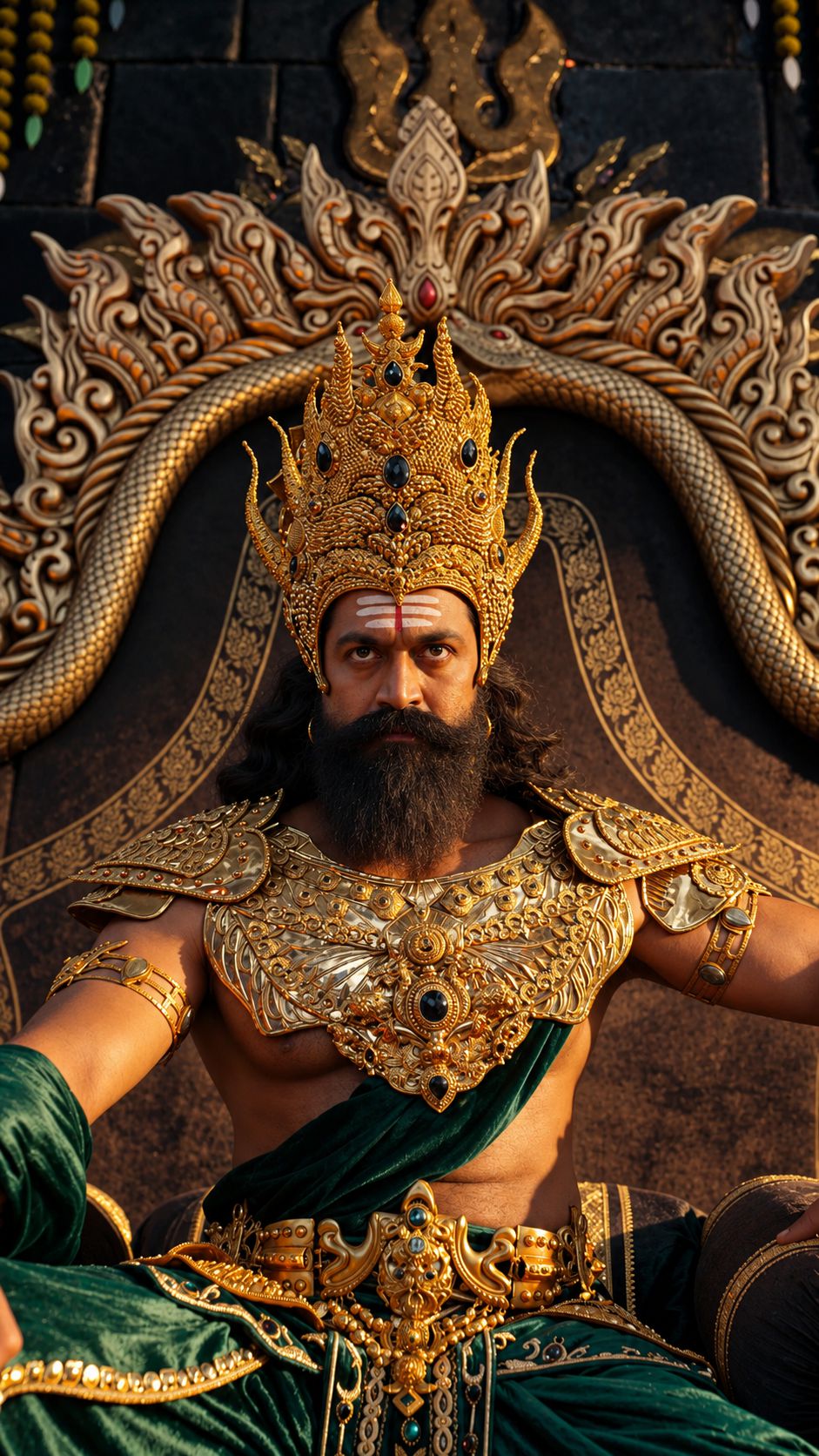
After a series of palace intrigues, Rama is forced to leave his kingdom and spend fourteen years in exile in the forest. He's accompanied by his wife Sita and his brother Lakshmana. But things get complicated when Ravana enters the picture, the powerful king of Lanka, a character of extraordinary intelligence, immense power, and an ego too big for even his ten heads. And yes, in Hindu mythology, Ravana is traditionally depicted with ten heads and twenty arms.
Ravana kidnaps Sita and takes her to his kingdom, setting off an enormous adventure in which Rama must face demons, supernatural creatures, gigantic armies, and all kinds of dangers to rescue her.
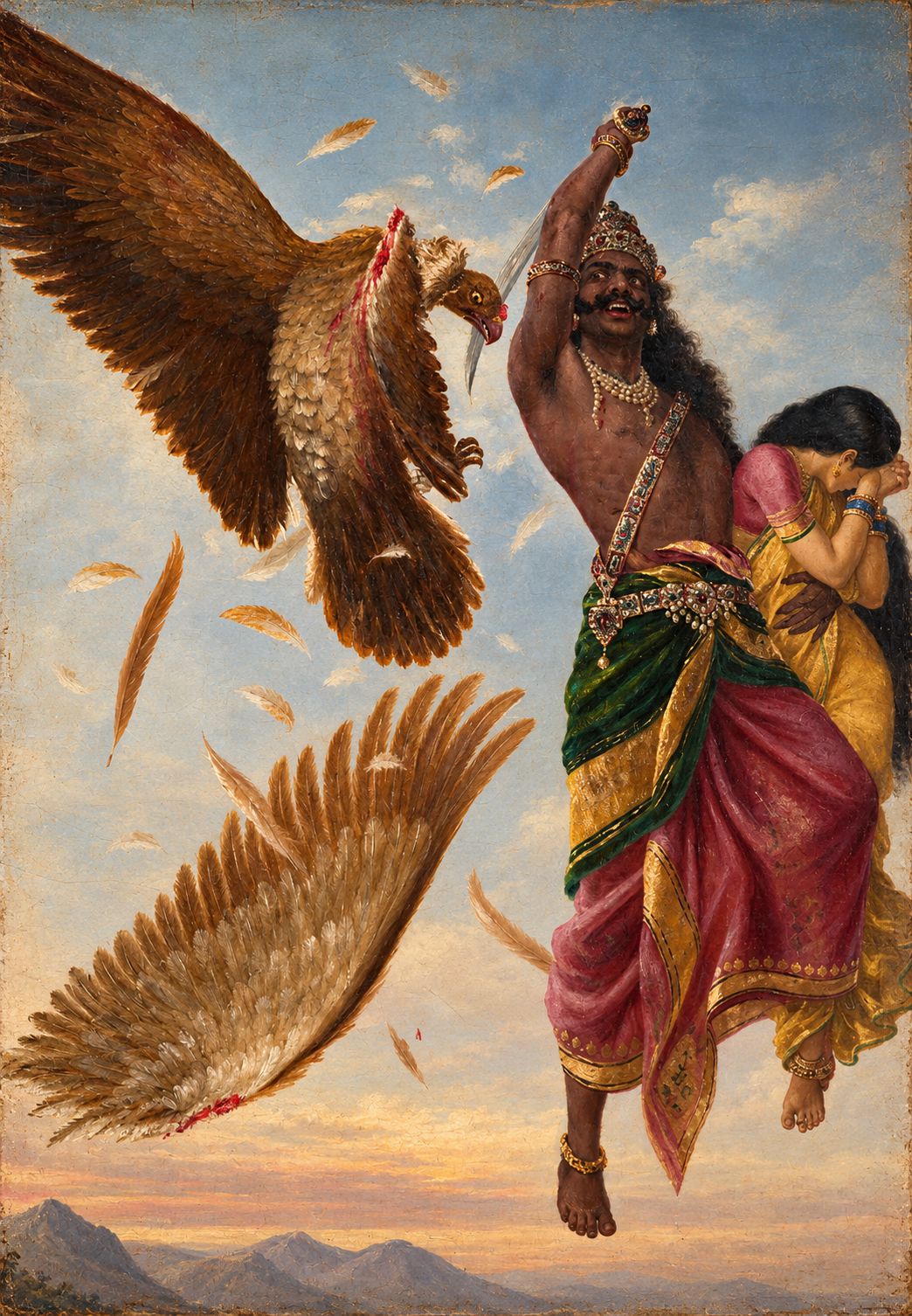
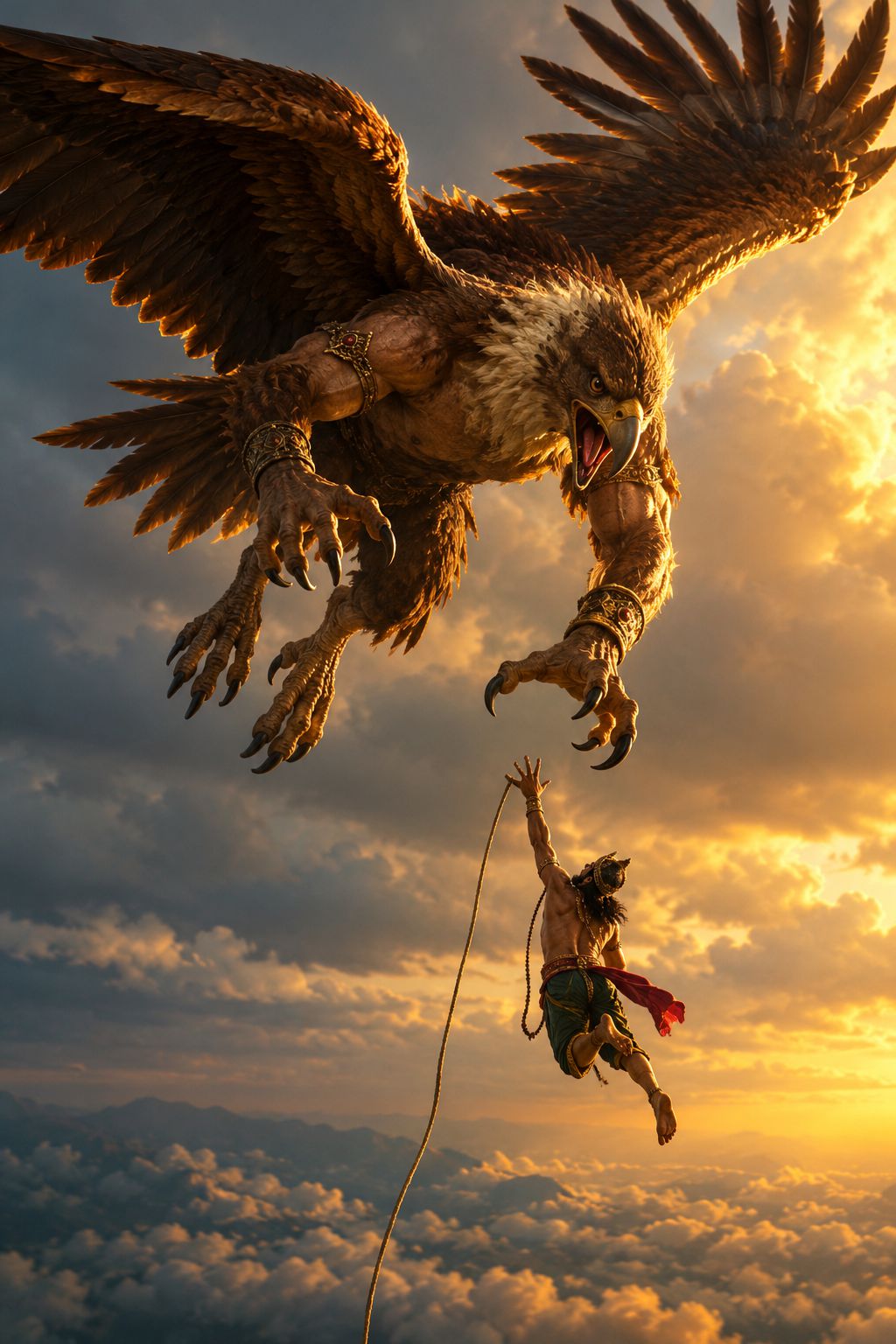
Along the way, he'll find extraordinary allies like Hanuman, the famous monkey god, a symbol of strength, devotion, and loyalty, capable of performing superhuman feats. There's also Jatayu, a gigantic mythological bird who tries to stop Sita's kidnapping by confronting Ravana himself, even though the odds are overwhelmingly against him.
What's really interesting is that beyond the battles and fantastic creatures, the Ramayana deals with deeply human themes: love, loyalty, ambition, sacrifice, justice, and the consequences of letting pride take over. It's a story about the struggle between good and evil, but also about how difficult doing the right thing can be when everything seems to be working against you.
Now imagine that entire mythological universe brought to the big screen using today's most advanced visual technology.
That's exactly what this new adaptation, directed by Nitesh Tiwari, is aiming to do, with Ranbir Kapoor playing Rama, Yash portraying Ravana, Sai Pallavi as Sita, and Sunny Deol taking on the role of Hanuman.
The movie is conceived as a two-part epic, with the first installment scheduled for November 5, 2026, and the second for 2027. It's a gigantic production that aims to bring one of India's most important cultural stories to movie screens around the world.
The visual effects are being handled by DNEG, the studio that has worked on movies like Interstellar, Dune, and Inception. And judging by the trailer, it looks like they've taken this project as an opportunity to show just how far they can push things.
Because holy shit, what an insane visual spectacle.
The environments are absolutely massive. The palaces, landscapes, armies, mythological creatures, battles... Everything operates on a scale that's hard to wrap your head around. Some shots look like paintings coming to life, and there are sequences where it's almost impossible to tell where reality ends and the digital wizardry begins.
The creatures are especially impressive. Gigantic beings, mythological animals, monsters that look like they've crawled straight out of some pissed-off god's nightmares... And everything is seamlessly integrated into environments that convey an absolutely staggering sense of scale. The lighting, textures, movement, level of detail... It's a fucking masterclass in visual effects.
And look, visual effects alone don't make a good movie. We've already learned that from way too many blockbusters that spend a fortune on CGI and then forget to write a story worth telling. But at least here, the story has already spent more than two thousand years proving it's worth telling.
On top of that, the soundtrack brings together two absolute heavyweights: Hans Zimmer and A. R. Rahman. Not bad, huh? Combine visuals like these with music capable of giving you goosebumps, and you could end up with the kind of cinematic experience that deserves to be enjoyed on a gigantic screen with the sound cranked all the way up.
Of course, we'll have to wait and see the finished movie. A trailer can be edited like a fucking masterpiece, only for the actual film to turn into two and a half hours of disappointment. But what they've shown so far has an ambition, a visual identity, and an ability to surprise that I've personally been missing for a long time.
And maybe that's what I like most about all this. The fact that an Indian production based on an ancient epic has managed to get me more excited than a huge chunk of Hollywood's biggest releases in recent years.
Ramayana looks absolutely incredible. And if the movie manages to maintain the quality shown in this trailer, we could be looking at one of those spectacles that makes getting off the couch, buying a ticket, and enjoying the movies like we did when we were kids completely worth it.
For now, here's the trailer. Watch it in full screen, crank up the volume, and enjoy, because this looks fucking awesome.
# Click here to see the full content of this post
ExtraBall
Today's slow-motion clip.
ExtraBall2



RAMAYANA: EPIC CINEMA STILL HAS PLENTY TO OFFER
I don't know about you, but it's been a long time since a movie trailer made me this excited to go to the theater. Lately, between sequels nobody asked for, unnecessary remakes, scripts that seem to have been written during a coffee break, and hundred-million-dollar productions that turn out to be boring as hell, it's getting pretty hard to find something that genuinely blows you away.
Well, a new trailer for Ramayana has just dropped, and this massive Indian production looks absolutely spectacular. And when I say spectacular, I'm not talking about a few explosions, a couple of CGI monsters, and some epic music playing in the background. I'm talking about a visual masterpiece that seems determined to remind us what cinema can achieve when it really sets out to blow our minds.
But before getting into the movie, it's worth knowing a little about the story behind it, because Ramayana isn't exactly some tale cooked up by a handful of Bollywood screenwriters.
The Ramayana is one of the great epics of ancient India and one of the most important texts in Hindu tradition. Its origins go back many centuries before the Common Era, and it's traditionally attributed to the sage Valmiki. We're talking about a story that's been passed down from generation to generation for more than two thousand years, inspiring countless works of art and remaining enormously important to the religious, cultural, and spiritual lives of millions of people.
FUCK ANY GIRL WITH AI
The story revolves around Rama, prince of the kingdom of Ayodhya and considered in Hinduism to be an incarnation of the god Vishnu. Rama represents righteousness, honor, duty, and loyalty to one's principles, even when sticking to them means sacrificing what matters most.
After a series of palace intrigues, Rama is forced to leave his kingdom and spend fourteen years in exile in the forest. He's accompanied by his wife Sita and his brother Lakshmana. But things get complicated when Ravana enters the picture, the powerful king of Lanka, a character of extraordinary intelligence, immense power, and an ego too big for even his ten heads. And yes, in Hindu mythology, Ravana is traditionally depicted with ten heads and twenty arms.
Ravana kidnaps Sita and takes her to his kingdom, setting off an enormous adventure in which Rama must face demons, supernatural creatures, gigantic armies, and all kinds of dangers to rescue her.
Along the way, he'll find extraordinary allies like Hanuman, the famous monkey god, a symbol of strength, devotion, and loyalty, capable of performing superhuman feats. There's also Jatayu, a gigantic mythological bird who tries to stop Sita's kidnapping by confronting Ravana himself, even though the odds are overwhelmingly against him.
What's really interesting is that beyond the battles and fantastic creatures, the Ramayana deals with deeply human themes: love, loyalty, ambition, sacrifice, justice, and the consequences of letting pride take over. It's a story about the struggle between good and evil, but also about how difficult doing the right thing can be when everything seems to be working against you.
Now imagine that entire mythological universe brought to the big screen using today's most advanced visual technology.
That's exactly what this new adaptation, directed by Nitesh Tiwari, is aiming to do, with Ranbir Kapoor playing Rama, Yash portraying Ravana, Sai Pallavi as Sita, and Sunny Deol taking on the role of Hanuman.
The movie is conceived as a two-part epic, with the first installment scheduled for November 5, 2026, and the second for 2027. It's a gigantic production that aims to bring one of India's most important cultural stories to movie screens around the world.
The visual effects are being handled by DNEG, the studio that has worked on movies like Interstellar, Dune, and Inception. And judging by the trailer, it looks like they've taken this project as an opportunity to show just how far they can push things.
Because holy shit, what an insane visual spectacle.
The environments are absolutely massive. The palaces, landscapes, armies, mythological creatures, battles... Everything operates on a scale that's hard to wrap your head around. Some shots look like paintings coming to life, and there are sequences where it's almost impossible to tell where reality ends and the digital wizardry begins.
The creatures are especially impressive. Gigantic beings, mythological animals, monsters that look like they've crawled straight out of some pissed-off god's nightmares... And everything is seamlessly integrated into environments that convey an absolutely staggering sense of scale. The lighting, textures, movement, level of detail... It's a fucking masterclass in visual effects.
And look, visual effects alone don't make a good movie. We've already learned that from way too many blockbusters that spend a fortune on CGI and then forget to write a story worth telling. But at least here, the story has already spent more than two thousand years proving it's worth telling.
On top of that, the soundtrack brings together two absolute heavyweights: Hans Zimmer and A. R. Rahman. Not bad, huh? Combine visuals like these with music capable of giving you goosebumps, and you could end up with the kind of cinematic experience that deserves to be enjoyed on a gigantic screen with the sound cranked all the way up.
Of course, we'll have to wait and see the finished movie. A trailer can be edited like a fucking masterpiece, only for the actual film to turn into two and a half hours of disappointment. But what they've shown so far has an ambition, a visual identity, and an ability to surprise that I've personally been missing for a long time.
And maybe that's what I like most about all this. The fact that an Indian production based on an ancient epic has managed to get me more excited than a huge chunk of Hollywood's biggest releases in recent years.
Ramayana looks absolutely incredible. And if the movie manages to maintain the quality shown in this trailer, we could be looking at one of those spectacles that makes getting off the couch, buying a ticket, and enjoying the movies like we did when we were kids completely worth it.
For now, here's the trailer. Watch it in full screen, crank up the volume, and enjoy, because this looks fucking awesome.
# Click here to see the full content of this post
ExtraBall
Today's slow-motion clip.
ExtraBall2

FEATURED MODEL
ONLYFANS · FREE
Cocoa Hazel Fantasies
@ebo_goddessvip
Discover her photos, explore her content and visit her profile for free.

FEATURED MODEL
ONLYFANS · FREE
Foxy Uzumaki
@foxyuzumaki
Discover her photos, explore her content and visit her profile for free.
Published on 2026/10/23
MASTURBATING IS FOR HOTTIES
david walter
Here we are, another Friday. Another week behind us, another battle survived, and another chance to hold our heads high, look ahead, and remind ourselves that no matter how complicated life gets, we've still got plenty of fight left in us.
Because life doesn't always make things easy. Sometimes it feels like all our problems have secretly agreed to show up at the same damn time. Just when you think you've finally dealt with one, another walks through the door, makes itself comfortable on the couch, and asks what's for dinner. And of course there are moments when you get tired, pissed off, frustrated, or feel like telling absolutely everything to go fuck itself.
But don't let anyone steal your happiness. Don't let anyone put out that spark that gets us out of bed every morning and keeps us fighting for what matters to us. Because having problems doesn't mean you're defeated, and going through a rough patch doesn't mean the rest of the road will be just as difficult.
Humanity didn't get this far by giving up at the first sign of trouble. We've spent thousands of years facing a world that has never handed us a damn thing. We've survived impossible conditions, learned from our mistakes, built, discovered, conquered, and started over countless times. And a big part of that drive comes from something deeply rooted in us men: the pride of refusing to give up, the stubbornness to try one more time, and the balls to keep moving forward even when we're scared.
FUCK ANY GIRL WITH AI
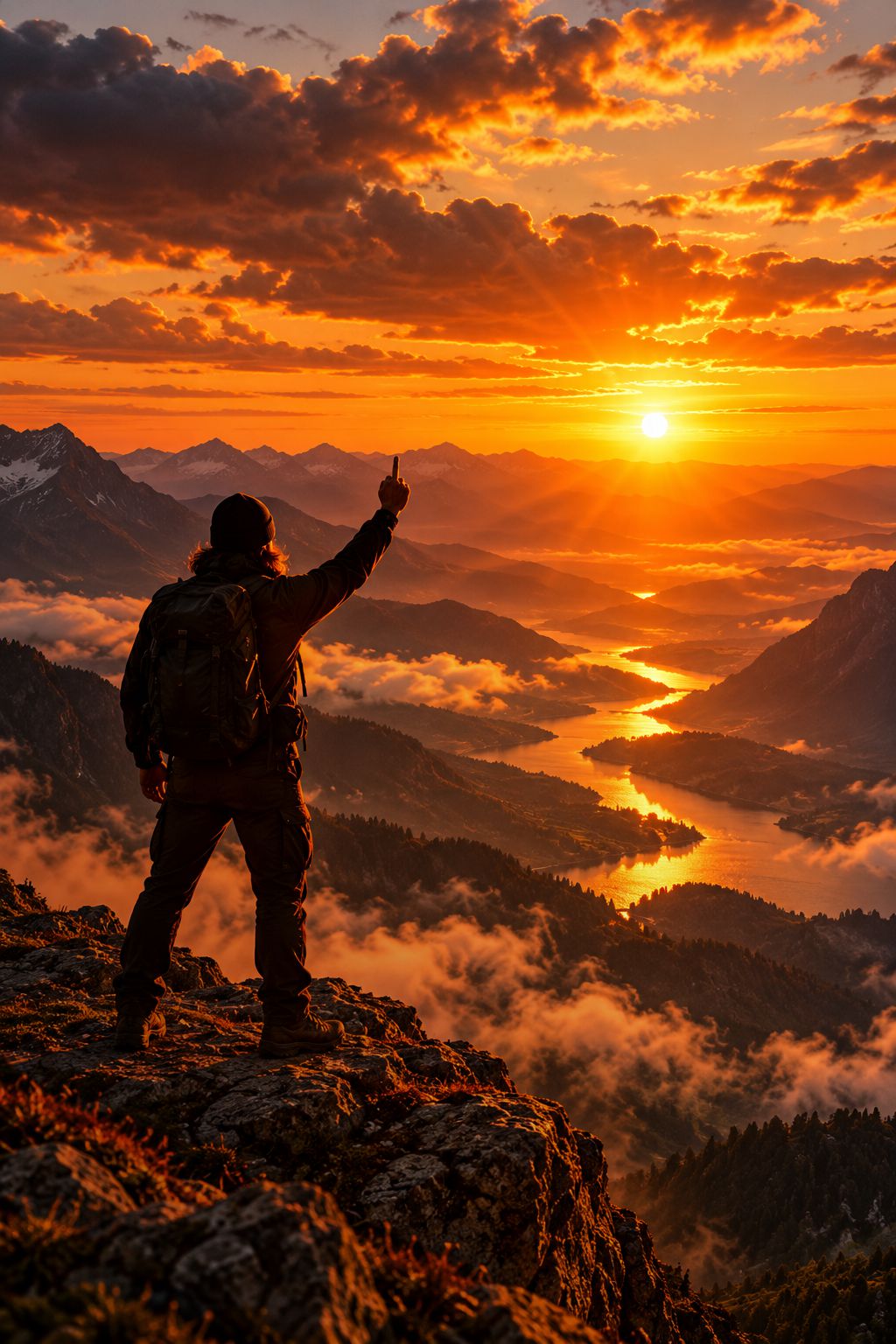
Because courage isn't about being fearless. It's about being afraid and carrying on anyway. Knowing things might go wrong and still taking that next step. Falling down, cursing everything under the sun, dusting yourself off, and getting back on your feet. And if you have to do it ten times, you do it ten times. If it takes twenty, then twenty it is. As long as there's strength left in you, there's still road ahead.
And it's not about living every single day ready for a fight, either. You've got to enjoy yourself, laugh at your own mistakes, celebrate the little victories, and find reasons to be happy even when life isn't going your way. Because we've already got enough shit to deal with without letting our worries steal the good moments too.
So today, on this fine Friday, I want to see you all holding your heads high. Everyone has their own stories, worries, personal battles, and obstacles along the way. Some are small, while others weigh as much as a fucking mountain. But we're still here, my friends. With hope, composure, courage, and that beautiful stubborn streak that's pulled us out of the deepest holes more times than we can count.
So come on, you magnificent bastards. Smile, enjoy the weekend, spend time doing what makes you happy, and don't let anyone convince you that you've reached the end of the road. There are still so many things to experience, so many joys to discover, and so many battles left to win.
KEEP THOSE BALLS UP, YOU BASTARDS! NOBODY'S FUCKING GIVING UP AROUND HERE!
# Click here to see all the content in this post
To watch these videos live, visit StripChat
If you want to see more content like this, visit our TELEGRAM CHANNEL
ExtraBall
And what happens to the game? Do the players get a refund, or do they lose their money?
ExtraBall2







MASTURBATING IS FOR HOTTIES
david walter
Here we are, another Friday. Another week behind us, another battle survived, and another chance to hold our heads high, look ahead, and remind ourselves that no matter how complicated life gets, we've still got plenty of fight left in us.
Because life doesn't always make things easy. Sometimes it feels like all our problems have secretly agreed to show up at the same damn time. Just when you think you've finally dealt with one, another walks through the door, makes itself comfortable on the couch, and asks what's for dinner. And of course there are moments when you get tired, pissed off, frustrated, or feel like telling absolutely everything to go fuck itself.
But don't let anyone steal your happiness. Don't let anyone put out that spark that gets us out of bed every morning and keeps us fighting for what matters to us. Because having problems doesn't mean you're defeated, and going through a rough patch doesn't mean the rest of the road will be just as difficult.
Humanity didn't get this far by giving up at the first sign of trouble. We've spent thousands of years facing a world that has never handed us a damn thing. We've survived impossible conditions, learned from our mistakes, built, discovered, conquered, and started over countless times. And a big part of that drive comes from something deeply rooted in us men: the pride of refusing to give up, the stubbornness to try one more time, and the balls to keep moving forward even when we're scared.
FUCK ANY GIRL WITH AI
Because courage isn't about being fearless. It's about being afraid and carrying on anyway. Knowing things might go wrong and still taking that next step. Falling down, cursing everything under the sun, dusting yourself off, and getting back on your feet. And if you have to do it ten times, you do it ten times. If it takes twenty, then twenty it is. As long as there's strength left in you, there's still road ahead.
And it's not about living every single day ready for a fight, either. You've got to enjoy yourself, laugh at your own mistakes, celebrate the little victories, and find reasons to be happy even when life isn't going your way. Because we've already got enough shit to deal with without letting our worries steal the good moments too.
So today, on this fine Friday, I want to see you all holding your heads high. Everyone has their own stories, worries, personal battles, and obstacles along the way. Some are small, while others weigh as much as a fucking mountain. But we're still here, my friends. With hope, composure, courage, and that beautiful stubborn streak that's pulled us out of the deepest holes more times than we can count.
So come on, you magnificent bastards. Smile, enjoy the weekend, spend time doing what makes you happy, and don't let anyone convince you that you've reached the end of the road. There are still so many things to experience, so many joys to discover, and so many battles left to win.
KEEP THOSE BALLS UP, YOU BASTARDS! NOBODY'S FUCKING GIVING UP AROUND HERE!
# Click here to see all the content in this post
To watch these videos live, visit StripChat
If you want to see more content like this, visit our TELEGRAM CHANNEL
ExtraBall
And what happens to the game? Do the players get a refund, or do they lose their money?
ExtraBall2

Contact
You can tell us whatever you want via email: [email protected]
If you prefer, you can use this contact form:
If you prefer, you can use this contact form:

Published on 2026/10/22
AMATEUR FLESH: MOTHER GENERAL
One of the great advantages of the internet is that it allows you to show a side of yourself that you might never dare to reveal in everyday life. You can be a quiet, shy person who goes unnoticed when walking down the street, and become someone completely different when you step in front of a camera, knowing that hundreds of people on the other side are waiting to see you.
We don't know what Mother_General_2545 is like in her everyday life. Maybe she's just as daring in person as she is in her pictures, or maybe she's a 25-year-old woman living a perfectly ordinary life who has found a place online to unleash her more exhibitionist side. And that mystery is precisely part of what makes so many amateurs appealing.
Because when a woman voluntarily shares intimate photographs, it's not always just about showing off her body. There can also be a healthy dose of curiosity, fun, self-confidence, and, let's face it, the pleasure of feeling desired.
And our protagonist seems to particularly enjoy that last ingredient.
FUCK ANY GIRL WITH AI
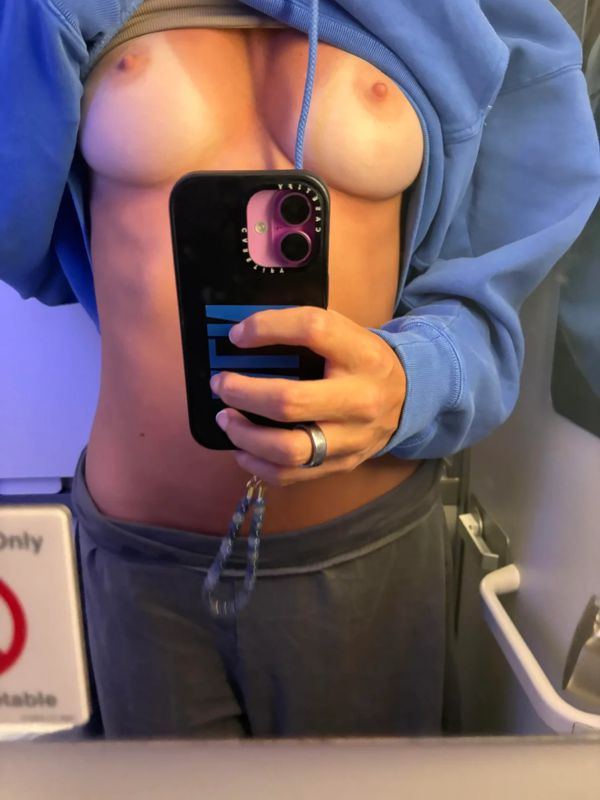
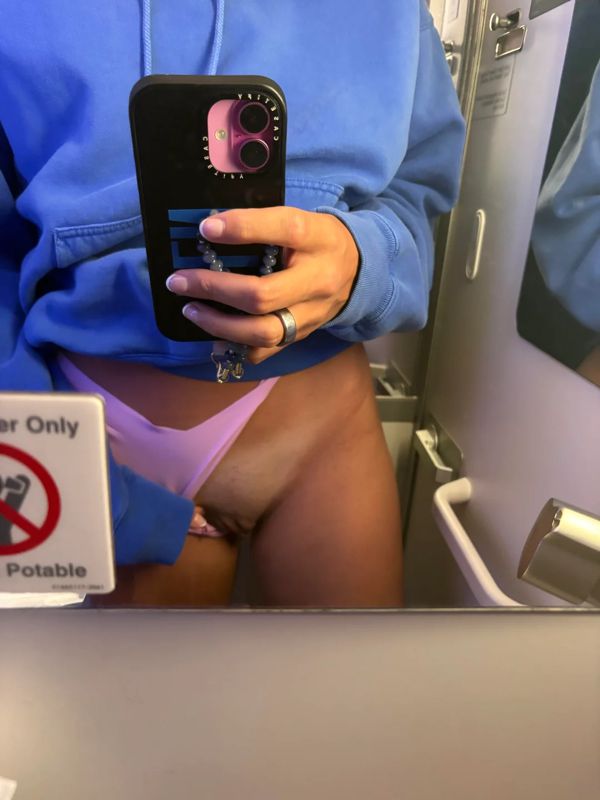
Her photographs are often accompanied by little provocations, seemingly innocent questions that, considering what she's showing, she knows perfectly well what kind of responses they'll inspire. And what's interesting is that she doesn't always just sit back and watch. Sometimes she replies to comments, flirts, and joins in the very game she started herself.
Because let's be real: when an attractive woman shares a nude photograph and asks who wants to play with her, she knows perfectly well there won't be any shortage of volunteers. And if she personally replies to one of them, even with just a couple of words, she's probably made that lucky guy's day.
But there's something else interesting about this dynamic. The internet provides a certain distance that makes it much easier to control how far you want to go. You can tease, flirt, receive compliments, and enjoy the attention without having to deal with the awkward situations that might arise face-to-face. She decides what she shows, who she responds to, and when the game ends. And that freedom can be just as appealing as the exhibitionism itself.
Maybe outside the screen she wouldn't appreciate a stranger approaching her and saying certain things. Maybe she wouldn't even know how to react to particular comments. But here, she makes the rules. She can be daring, enjoy all that attention, and log off whenever she feels like it, without having to explain herself to anyone.
And there's no need to look for some overly complicated psychological explanation, either. We all like feeling attractive, receiving a compliment, and knowing that someone finds us interesting. The difference is that some people get that satisfaction by sharing a vacation photo, while others prefer to do it by taking their clothes off and letting everyone's imagination do the rest.
Whatever her motivation, Mother_General_2545 seems to have found a way to have fun with her exhibitionism and the reactions she provokes. And as for us, we're not going to pretend we've come here to conduct a sociological study. We've simply selected a few of her photographs so you can get to know her a little better.
Because at the end of the day, no matter how much we analyze it, one thing is pretty clear: she likes showing off, and we like watching. And as long as everyone's happy, there's not much more to discuss.
# Click here to see all the content from this post
ExtraBall







AMATEUR FLESH: MOTHER GENERAL
One of the great advantages of the internet is that it allows you to show a side of yourself that you might never dare to reveal in everyday life. You can be a quiet, shy person who goes unnoticed when walking down the street, and become someone completely different when you step in front of a camera, knowing that hundreds of people on the other side are waiting to see you.
We don't know what Mother_General_2545 is like in her everyday life. Maybe she's just as daring in person as she is in her pictures, or maybe she's a 25-year-old woman living a perfectly ordinary life who has found a place online to unleash her more exhibitionist side. And that mystery is precisely part of what makes so many amateurs appealing.
Because when a woman voluntarily shares intimate photographs, it's not always just about showing off her body. There can also be a healthy dose of curiosity, fun, self-confidence, and, let's face it, the pleasure of feeling desired.
And our protagonist seems to particularly enjoy that last ingredient.
FUCK ANY GIRL WITH AI
Her photographs are often accompanied by little provocations, seemingly innocent questions that, considering what she's showing, she knows perfectly well what kind of responses they'll inspire. And what's interesting is that she doesn't always just sit back and watch. Sometimes she replies to comments, flirts, and joins in the very game she started herself.
Because let's be real: when an attractive woman shares a nude photograph and asks who wants to play with her, she knows perfectly well there won't be any shortage of volunteers. And if she personally replies to one of them, even with just a couple of words, she's probably made that lucky guy's day.
But there's something else interesting about this dynamic. The internet provides a certain distance that makes it much easier to control how far you want to go. You can tease, flirt, receive compliments, and enjoy the attention without having to deal with the awkward situations that might arise face-to-face. She decides what she shows, who she responds to, and when the game ends. And that freedom can be just as appealing as the exhibitionism itself.
Maybe outside the screen she wouldn't appreciate a stranger approaching her and saying certain things. Maybe she wouldn't even know how to react to particular comments. But here, she makes the rules. She can be daring, enjoy all that attention, and log off whenever she feels like it, without having to explain herself to anyone.
And there's no need to look for some overly complicated psychological explanation, either. We all like feeling attractive, receiving a compliment, and knowing that someone finds us interesting. The difference is that some people get that satisfaction by sharing a vacation photo, while others prefer to do it by taking their clothes off and letting everyone's imagination do the rest.
Whatever her motivation, Mother_General_2545 seems to have found a way to have fun with her exhibitionism and the reactions she provokes. And as for us, we're not going to pretend we've come here to conduct a sociological study. We've simply selected a few of her photographs so you can get to know her a little better.
Because at the end of the day, no matter how much we analyze it, one thing is pretty clear: she likes showing off, and we like watching. And as long as everyone's happy, there's not much more to discuss.
# Click here to see all the content from this post
ExtraBall
Published on 2026/10/22
SRVIRAL #2330
Parkour Time
FUCK ANY GIRL WITH AI
You can see many more videos, curiosities and silly stuff visiting srviral.com
You can also join the SRVIRAL TELEGRAM CHANNEL to see much more content.
ExtraBall




SRVIRAL #2330
Parkour Time
FUCK ANY GIRL WITH AI
 BMX |
 Where's mom? |
 Skills |
 His first bike |
 Training |
 Health! |
 Pier |
 Cannon |
 Diving |
You can also join the SRVIRAL TELEGRAM CHANNEL to see much more content.
ExtraBall
Published on 2026/10/22
THE ART OF WEARING A DICK ON EVERY FINGER
In recent years, nail salons have been popping up everywhere. What used to be a beauty treatment many women saved for special occasions has become a regular part of their beauty routine, with specialized salons, competitive prices, and an almost endless variety of designs.
Much of this expansion has been driven by small specialized businesses opening in cities around the world. Just take a walk through any shopping district to see how popular getting your nails done has become. Social media, new techniques, and the growing demand for personalized designs have helped turn nail art into an industry with countless possibilities.
FUCK ANY GIRL WITH AI

Because painting your nails red and leaving the salon with all ten looking exactly the same stopped being the only option a long time ago. Nowadays, you can have tiny drawings, characters, landscapes, reproductions of famous paintings, or genuine works of art squeezed onto just a couple of square centimeters.
And naturally, once you open the door to creativity, dicks are bound to find their place too.
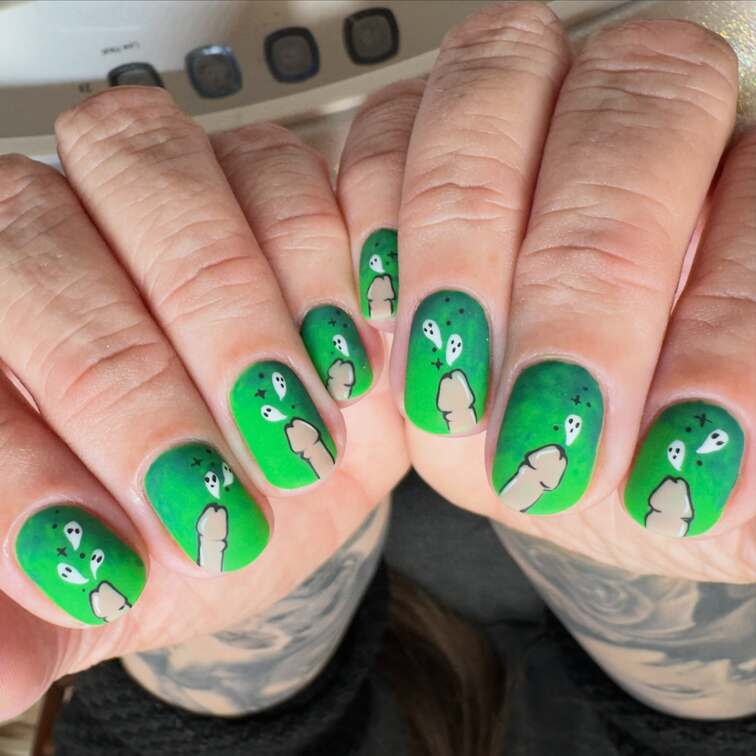
The artists responsible for today's collection are the women behind Hey, Nice Nails!, a nail art studio based in Long Beach, California, run by two sisters who, besides working professionally as nail artists, have also written books on the subject.
Their Instagram account has over 100,000 followers and thousands of posts, so you can imagine how many designs have passed through their brushes. Although their work covers all kinds of manicures, for this post I've picked one of their naughtiest specialties: miniature dicks.
And these women have managed to turn the penis into a character with a life of its own. We've got dicks dressed as ghosts, dicks transformed into Frankenstein's monsters, dicks surrounded by flowers, dicks that look like cacti, and even little compositions inspired by famous works of art. All painted in a simple, fun, and instantly recognizable illustration style.
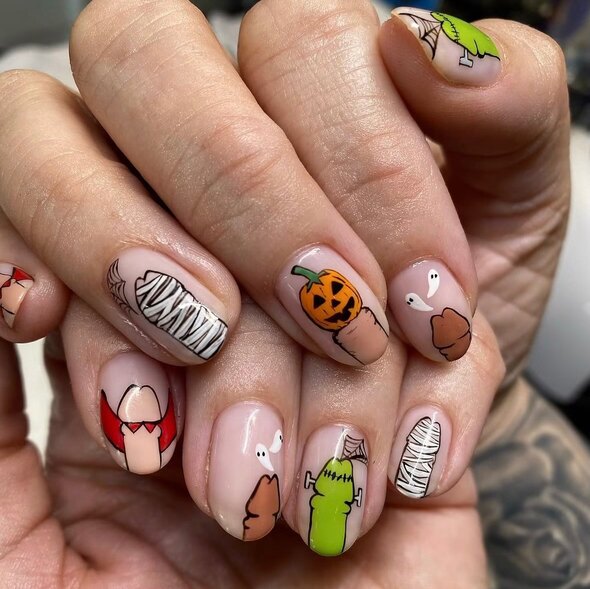
The funny thing is that some of these designs blend in so well that, at first glance, they look like perfectly innocent manicures. Pretty colors, cute little ghosts, some flowers... until you take a closer look and discover that the star of the whole composition is a cock.
And don't underestimate the technical skill involved, because drawing a dick might sound easy, but doing it with a tiny brush, on a curved surface, while giving each design its own little details requires a seriously steady hand. Especially when we're talking about compositions featuring Halloween elements, artistic references, or entire miniature scenes.
It's also interesting how our relationship with manicures has changed. Nails have become a kind of personal showcase, a way to express your tastes, interests, sense of humor, or, as in this case, an overwhelming desire to mess with people a little.
And that's probably a big part of the charm of these designs. They're not meant to be erotic or sexually arousing. They're little humorous illustrations that play with the shape of a penis and turn it into whatever the artists can imagine. Proof that even a dick can end up looking adorable if you draw it with enough charm.
I'll leave you with a selection of manicures by Hey, Nice Nails!, because some of them are far more elaborate than they first appear, and the details are well worth checking out.
Now just imagine the scene: you walk into a nail salon, they ask what design you'd like, and you casually reply: "Give me ten dicks, but make sure they match my handbag."
# Click here to see all the content from this post
ExtraBall
Kneading.
ExtraBall2







THE ART OF WEARING A DICK ON EVERY FINGER
In recent years, nail salons have been popping up everywhere. What used to be a beauty treatment many women saved for special occasions has become a regular part of their beauty routine, with specialized salons, competitive prices, and an almost endless variety of designs.
Much of this expansion has been driven by small specialized businesses opening in cities around the world. Just take a walk through any shopping district to see how popular getting your nails done has become. Social media, new techniques, and the growing demand for personalized designs have helped turn nail art into an industry with countless possibilities.
FUCK ANY GIRL WITH AI
Because painting your nails red and leaving the salon with all ten looking exactly the same stopped being the only option a long time ago. Nowadays, you can have tiny drawings, characters, landscapes, reproductions of famous paintings, or genuine works of art squeezed onto just a couple of square centimeters.
And naturally, once you open the door to creativity, dicks are bound to find their place too.
The artists responsible for today's collection are the women behind Hey, Nice Nails!, a nail art studio based in Long Beach, California, run by two sisters who, besides working professionally as nail artists, have also written books on the subject.
Their Instagram account has over 100,000 followers and thousands of posts, so you can imagine how many designs have passed through their brushes. Although their work covers all kinds of manicures, for this post I've picked one of their naughtiest specialties: miniature dicks.
And these women have managed to turn the penis into a character with a life of its own. We've got dicks dressed as ghosts, dicks transformed into Frankenstein's monsters, dicks surrounded by flowers, dicks that look like cacti, and even little compositions inspired by famous works of art. All painted in a simple, fun, and instantly recognizable illustration style.
The funny thing is that some of these designs blend in so well that, at first glance, they look like perfectly innocent manicures. Pretty colors, cute little ghosts, some flowers... until you take a closer look and discover that the star of the whole composition is a cock.
And don't underestimate the technical skill involved, because drawing a dick might sound easy, but doing it with a tiny brush, on a curved surface, while giving each design its own little details requires a seriously steady hand. Especially when we're talking about compositions featuring Halloween elements, artistic references, or entire miniature scenes.
It's also interesting how our relationship with manicures has changed. Nails have become a kind of personal showcase, a way to express your tastes, interests, sense of humor, or, as in this case, an overwhelming desire to mess with people a little.
And that's probably a big part of the charm of these designs. They're not meant to be erotic or sexually arousing. They're little humorous illustrations that play with the shape of a penis and turn it into whatever the artists can imagine. Proof that even a dick can end up looking adorable if you draw it with enough charm.
I'll leave you with a selection of manicures by Hey, Nice Nails!, because some of them are far more elaborate than they first appear, and the details are well worth checking out.
Now just imagine the scene: you walk into a nail salon, they ask what design you'd like, and you casually reply: "Give me ten dicks, but make sure they match my handbag."
# Click here to see all the content from this post
ExtraBall
Kneading.
ExtraBall2

Previous posts:
Pages: 12345678 ... 26692670267126722673267426752676 Jump to page:
What is ALRINCON
ALRINCON has been online since 2003. Back when the internet still made noise every time you connected, we were already publishing things here. What started as a personal little corner gradually evolved into a digital magazine focused on adult entertainment, internet culture, visual media, viral trends, and all that wonderful chaos that’s been floating around online for decades.This is not your typical porn website, and it never tried to be. At ALRINCON, material is selected, discussed, and given context. This isn’t just a place where videos and photos get uploaded: stories are built around them too.
Much More Than Videos or Photos
The internet is full of automated websites where material appears with no context or personality behind it. ALRINCON has always tried to do things differently.Here you'll find viral videos, posts related to erotica, compilations, models, porn, WTF material, social media phenomena, humor, curiosities, digital trends, visual culture, and online entertainment.
Porn is part of the ALRINCON universe, of course, but it’s far from the site's only driving force. Just like a magazine mixes different sections, you'll find adult material, erotic photography, surreal internet moments, social media, unusual videos, and all those little bits of online madness that show up every day.
The Editorial Style of ALRINCON
The biggest difference between ALRINCON and many other websites is that there’s a perspective behind what gets published here. The material comes from the internet, sure, but the texts are not just automated filler. They’re written with purpose: to provide context, comment on what’s happening, give personality to the site, or simply make you smile.The tone is close, often ironic, and built around a very specific identity that has been part of the site for years. Because the internet is already cold, fast, and impersonal enough without trying to look at it from a more human and entertaining perspective too.
More Than 20 Years Following the Evolution of the Internet
After more than two decades of publishing almost every single day, ALRINCON has also become a small time capsule showing how the internet itself has evolved.From the early days of blogs, forums, and webcams to the explosion of YouTube, Instagram, TikTok, Twitch, amateur material, content creators, artificial intelligence, and the latest forms of digital entertainment. The site has evolved alongside the internet, adapting to every era while never losing its original essence: discovering interesting things and sharing them in a different way.
Over all these years, millions of visits and thousands of posts have become part of the historical archive of one of the wildest, weirdest, and most fascinating eras the internet has ever lived through.
A Website With Its Own Identity
People don’t come to ALRINCON just to consume articles quickly and disappear. They come here to explore, discover new things, get entertained, and often lose themselves for a while among videos, photos, stories, and posts that probably won’t show up anywhere else.The philosophy has always been the same: trying to find visual material with something special about it. Something different. Something that stands out from the constant noise of algorithms and social media.
Because there are thousands of websites with videos. But very few have spent more than 20 years maintaining such a recognizable personality online.
Updated Daily
ALRINCON is updated daily with new videos, images, compilations, and posts related to viral entertainment, photography, humor, internet culture, social media, erotica, digital trends, and hidden gems from around the internet.And thanks to its huge historical archive, the site also lets you revisit how the internet, trends, humor, photography, and the way we consume videos and images have changed from the early 2000s to today.